From one state to sixteen, on one platform.
Client:
BrightSun Energy
Home solar sales and installation
The problem
BrightSun sold and installed home solar in Texas, and wanted independent sales companies in other states selling its installations under its name. Nothing it ran could travel: proposals were priced for Texas utilities, and financing and contracts were set up for one state. Every rep also designed systems in Aurora, the industry-standard solar design tool, which then cost $159 per user per month. A hundred-person sales team cost $15,900 a month before a single proposal went out, so every new hire made the software bill bigger.
Our approach
We built the design work into the platform first. Reps lay out the system and show the 20-year savings, the payback, and the federal tax credit inside Solarflo, with no per-seat license between a rep and a proposal. Then we built the platform around sales companies: each one gets its own reps, pricing, and pipeline, and BrightSun sees all of them. The hard part was making a new state work like Texas. Every proposal is priced for the local utility, every loan comes from a lender inside the platform, and every contract follows the rules of the state it is signed in, always under BrightSun's name.
What changed
From Texas only to signed contracts in 16 states
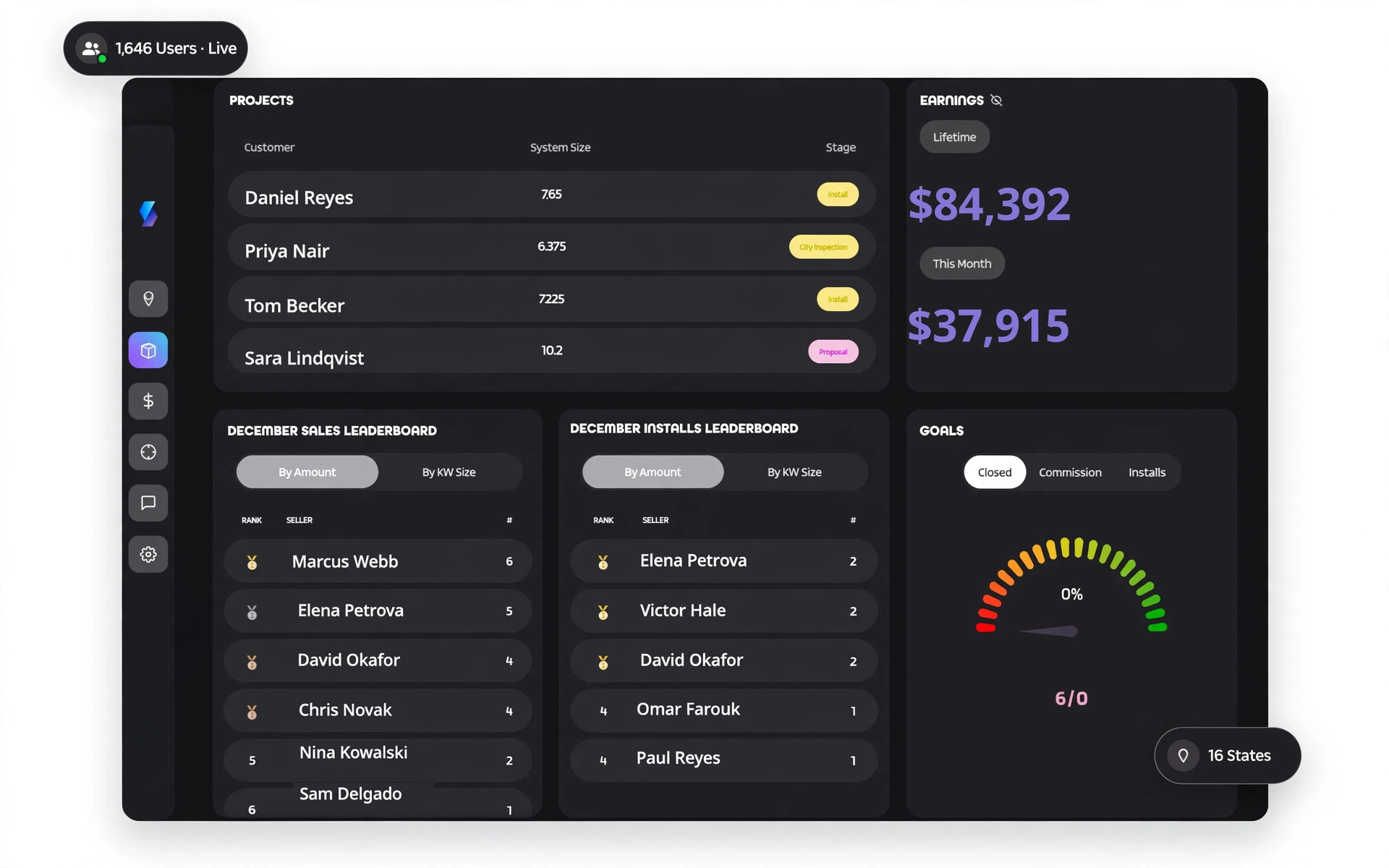
1,646 users across 130+ dealer organizations
$78.8M in signed project value
No per-seat design license between a rep and a proposal
Proposals priced for the local utility
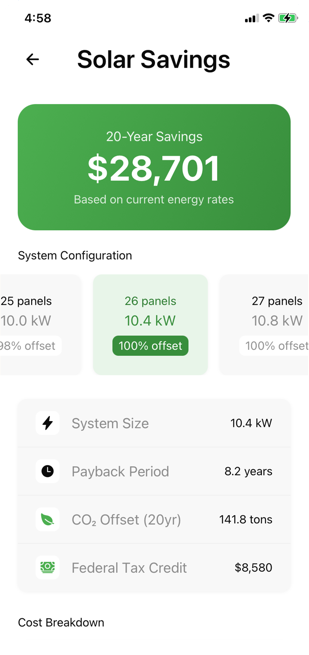
A rep sits down in a home in a state BrightSun has never sold in. They enter the address, pick the utility and rate plan that actually serve it, and the proposal builds itself: system size, 20-year savings against the real rates, payback period, the federal tax credit, even the CO₂ offset. The numbers are for that house, not a state average.
That is what closes the sale. A homeowner comparing a solar payment against their own electric bill is looking at two numbers they already know.
130+ sales teams, one name on the contract
 The Solarflo sales platform
Each sales company has its own space in the platform: its reps, its pipeline, its numbers. Smaller teams nest underneath, so a national sales company and a three-person team both fit. A rep sees their own pipeline, a sales manager sees the whole company, and BrightSun sees the network. The contract the customer signs always says BrightSun.
So 130+ independent companies sell as hard as they can, while every proposal, loan document, and installation stays in one system under one name. Leaderboards rank every rep and every team by revenue or by kilowatts, and each rep watches their own goals and earnings on a live dashboard. Nobody emails a spreadsheet on Friday.
Financed and signed without leaving the platform
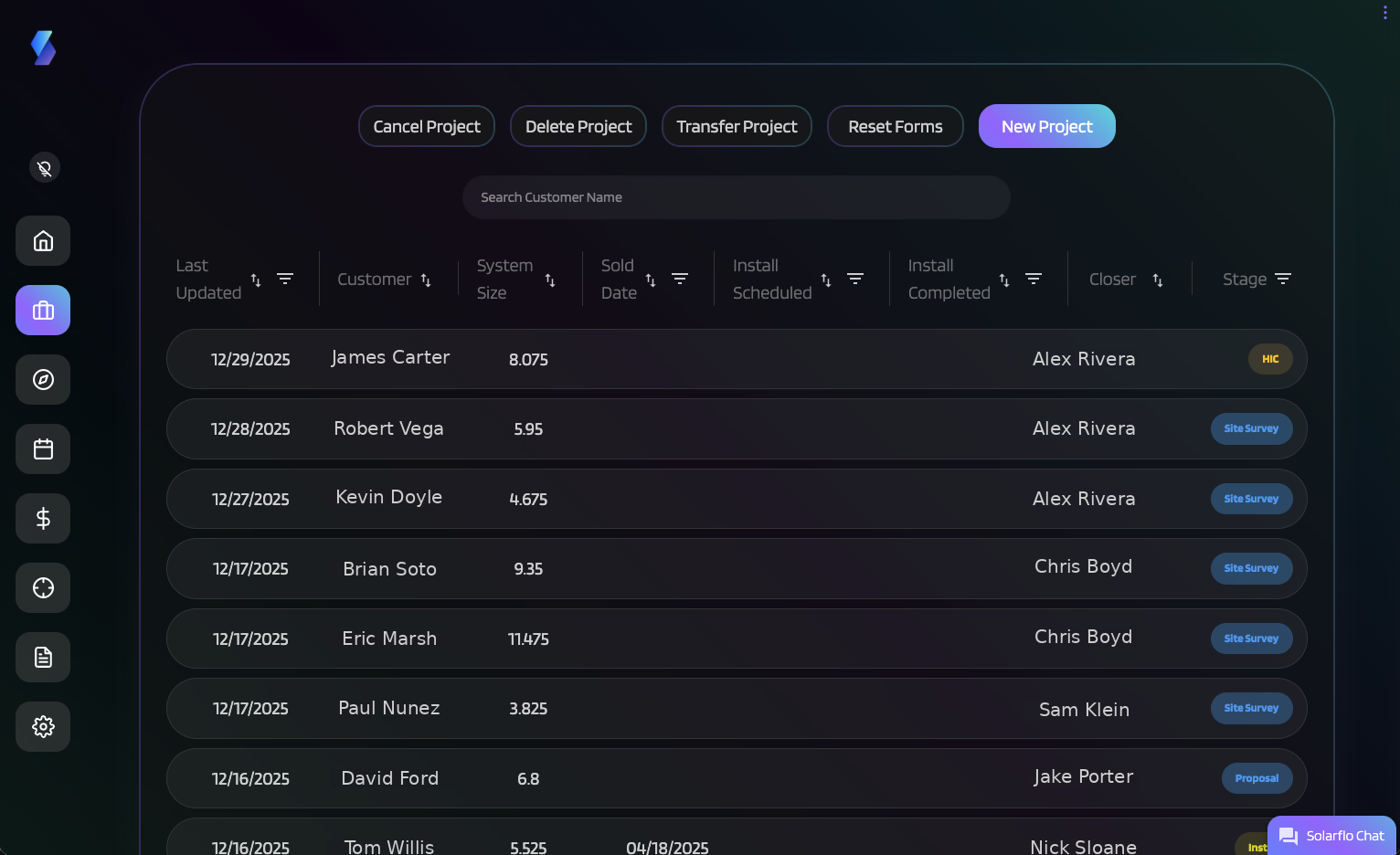
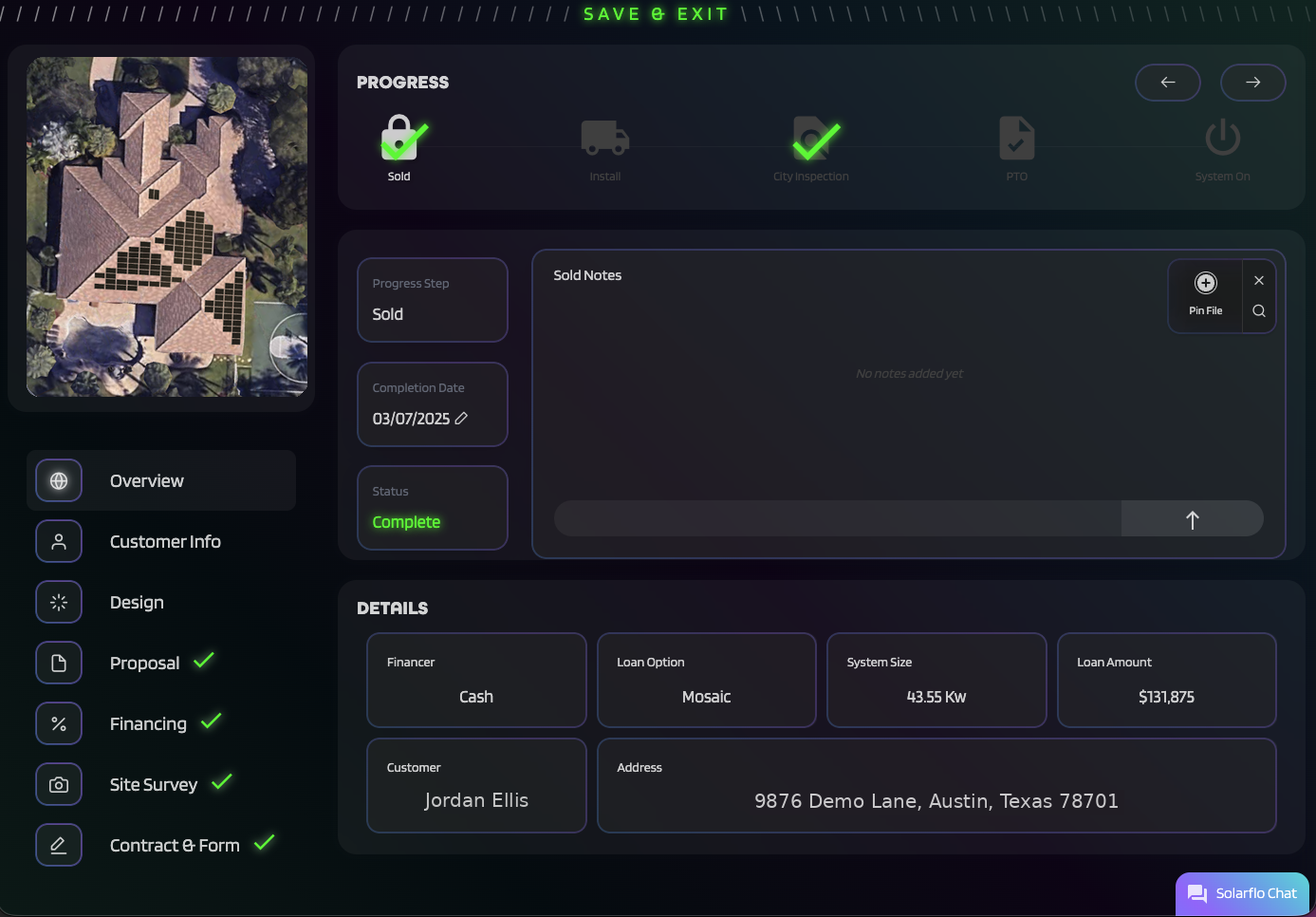
The proposal is only half the sale. From the same screen, the rep runs financing with lenders such as Mosaic and Sunlight, which are built into the platform. The disclosures, the credit application, the offer, and the loan documents all happen there, so the customer applies and signs where they were quoted. The signed contract lands in the project file with a full audit trail. Contracts signed this way add up to $78.8M in project value.
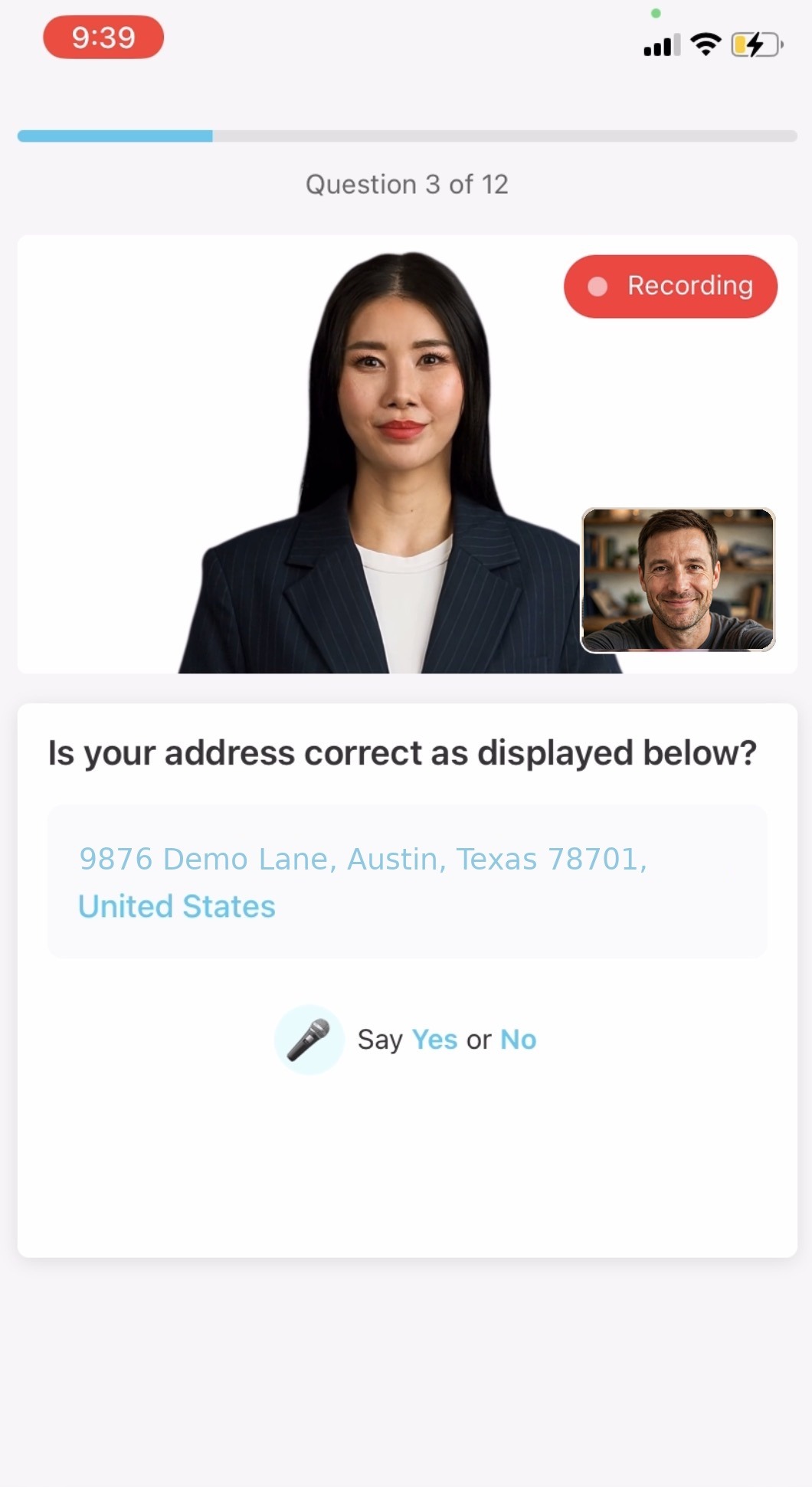
Once the contract is signed, the customer gets an email inviting them to a short recorded session. An AI assistant walks them through the project details, and they confirm each one on camera. The recording is saved to the project file. Nobody watches these day to day. They are there for the day a customer says they never signed, or were promised something different.
The crew gets the job on a phone
 The Connect field app
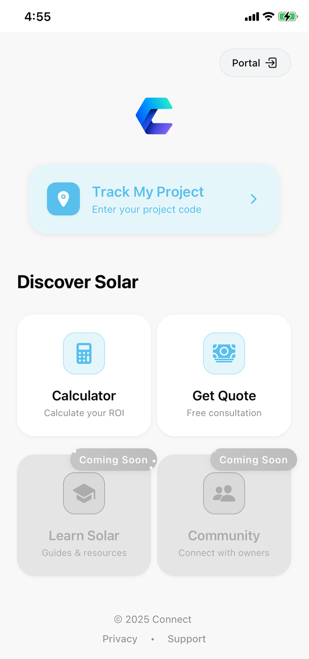
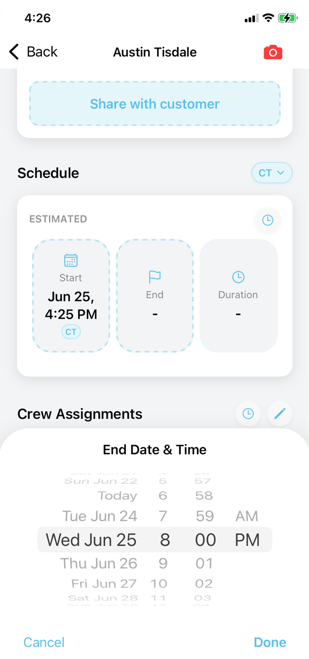
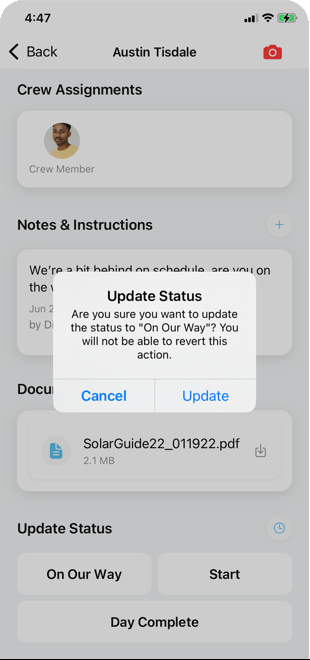
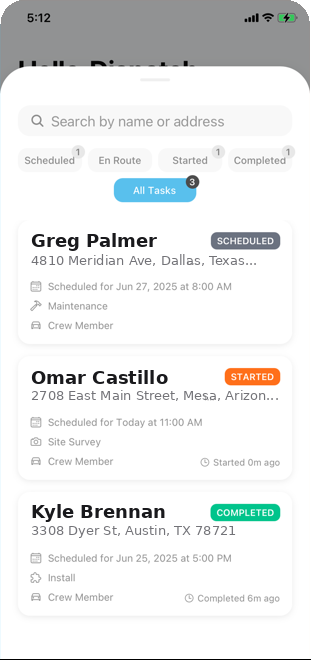
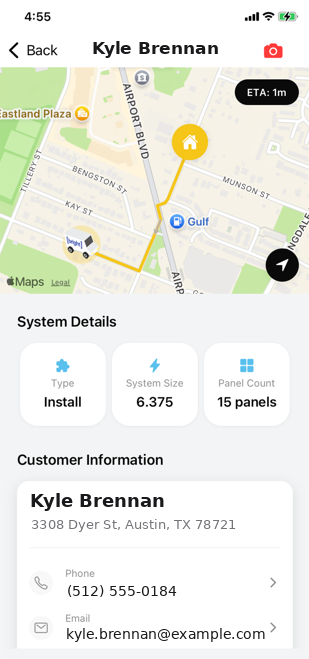
A sold project becomes a job in the Connect app. The crew sees the schedule, the site details, and their assignments. The office sees where every crew is and when they will arrive. The customer tracks it too, from a project code, instead of calling to ask when the truck is coming.
The app works the way field work works. Schedules change, so the office can send the customer an updated time in a tap.
Every project gets its own progress tracker: sold, installed, inspected, permitted, system on. The system size, the loan, and the customer details ride along, so the office and the crew work from the same record.
Built and run for two years
We built Solarflo and the Connect app and ran them for two years, including every lender connection and the recorded sessions. Adding a state, a lender, or a sales company was a change to one system, not a new set of tools for every team.
If you sell through dealers or partners and each one runs on its own tools, tell us where it hurts, or read how we approach systems integration.