From a street address to a financed solar design, in one sitting.
Client:
SunLink
Sells home solar online, installed by partner companies
The problem
Selling home solar takes a roof design, a utility bill, a loan, a contract, and an installer. Each of those normally lives with a different vendor or a different person. SunLink wanted a homeowner to get through all of it online, in one sitting, and an installer to pick the job up from there.
Our approach
We took over the platform in its early stages and treated every vendor as a part of one product, not a separate step. The hardest part was the roof design itself: a pipeline that turns aerial photos and a 3D height map into a finished, code-compliant layout, fast enough that a homeowner will wait for it.
What the platform does
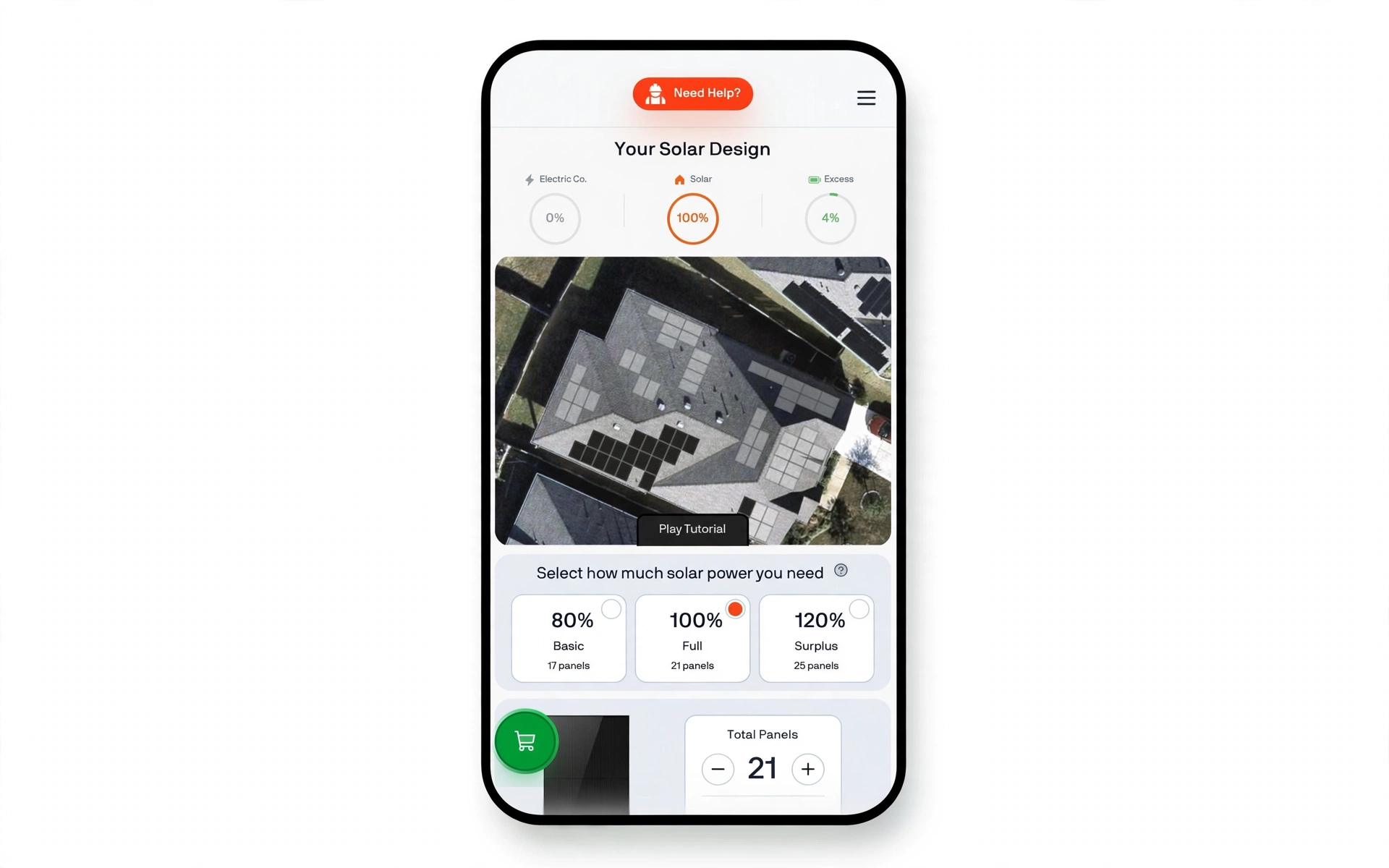
Shows a homeowner panels on their own roof about 20 seconds after they type an address
Handles savings, financing, contract, and deposit in one place
Routes each job to the right installer, who runs it from their own portal
Scales its computing up when designs are requested, not around the clock
About 20 seconds from address to design
A homeowner types their address. About 20 seconds later they are looking at their own roof from above with panels already laid out, and each face of the roof shaded by how much sun it gets.
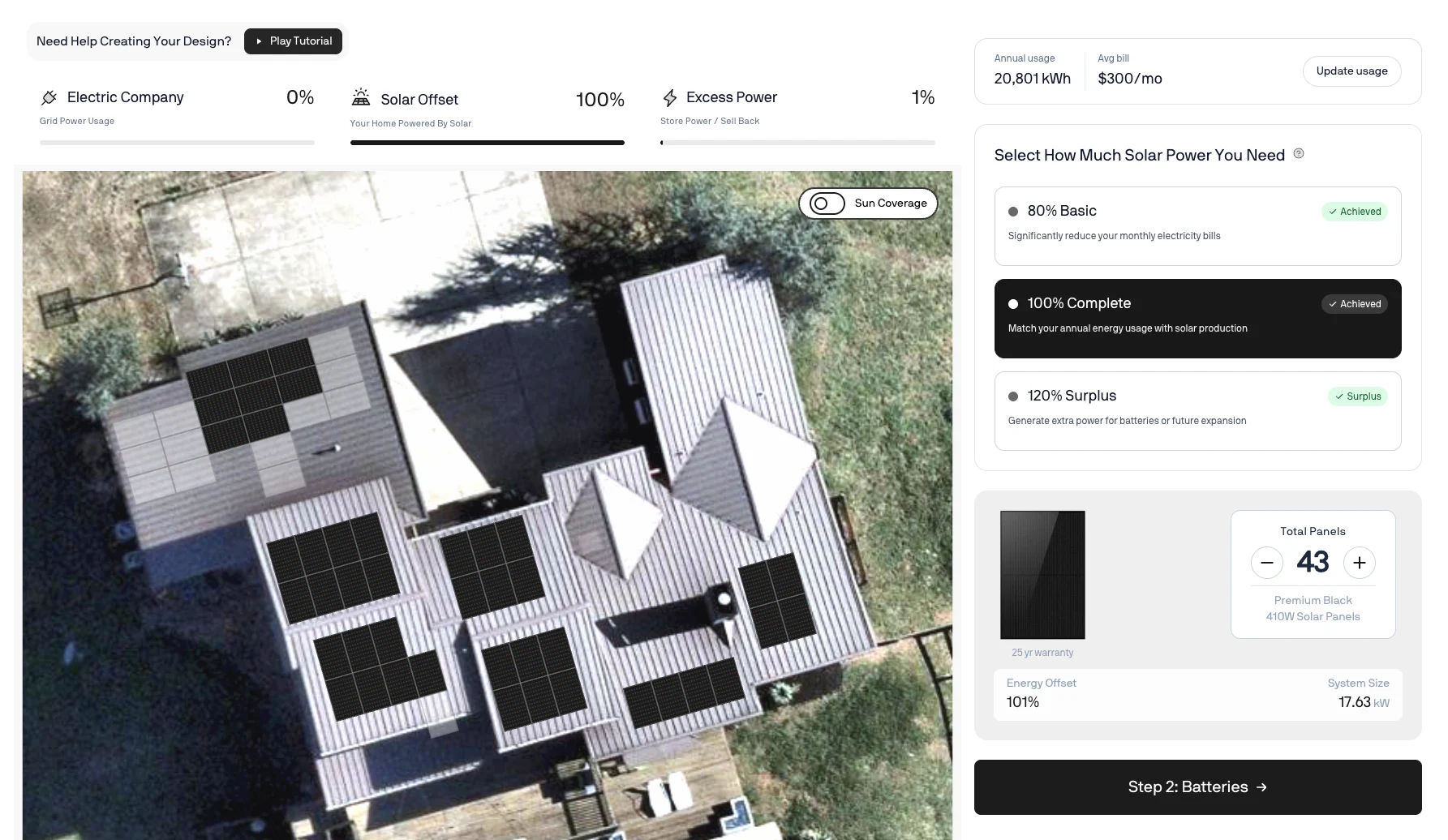
Nobody draws that layout. We built the pipeline that produces it. It pulls aerial photos and a 3D height map of the property and lines the two up. From the height map it works out each plane of the roof, its pitch, and the shadow that falls across it through the year. Two AI models find what is in the way: vents, skylights, trees. Then it applies the fire code on its own, keeping panels 36 inches back from the ridge and 18 inches from valleys with walkways clear, and packs panels into what is left, turned whichever way fits the slope best.
Doing all of that in less than half a minute is a computing problem as much as a design one. A house with three roof sections is split into three jobs that run side by side, the number of workers is set by how many roofs the address actually has, and the AI models run on graphics hardware that is called only when a design needs it. That infrastructure work was later featured by Render, the hosting company it runs on.
Savings a homeowner can check
The homeowner picks their electric utility and rate plan from the ones that actually serve their address. The platform builds a year-by-year savings chart from that utility's real rates, with the loan or lease payment drawn over it, so the comparison is between two bills they recognize.
The figures behind that chart come from several vendors, and vendors do not agree on formats. One reports energy in watt-hours where another expects kilowatt-hours, a difference of a thousand times. The platform converts and checks the numbers at every point where two systems meet, because that is where a wrong figure gets in.
Financing without leaving the page
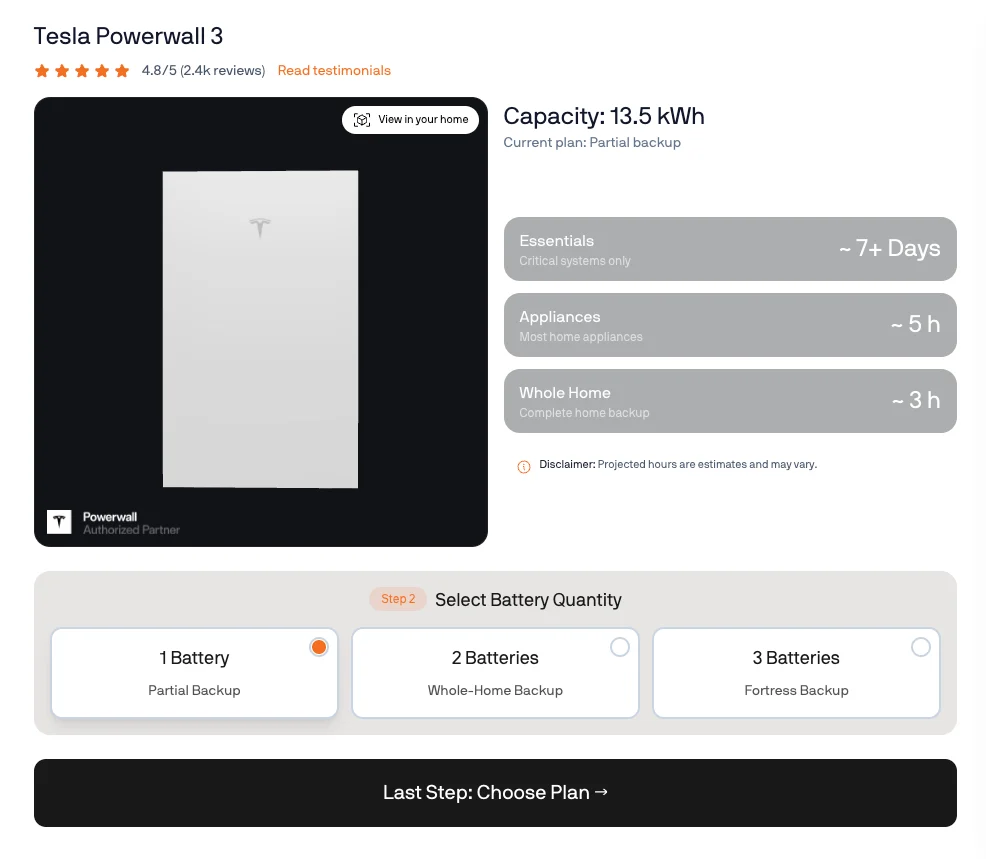
Before choosing a plan, the homeowner can add a home battery and see how many hours or days of backup it would give them in an outage.
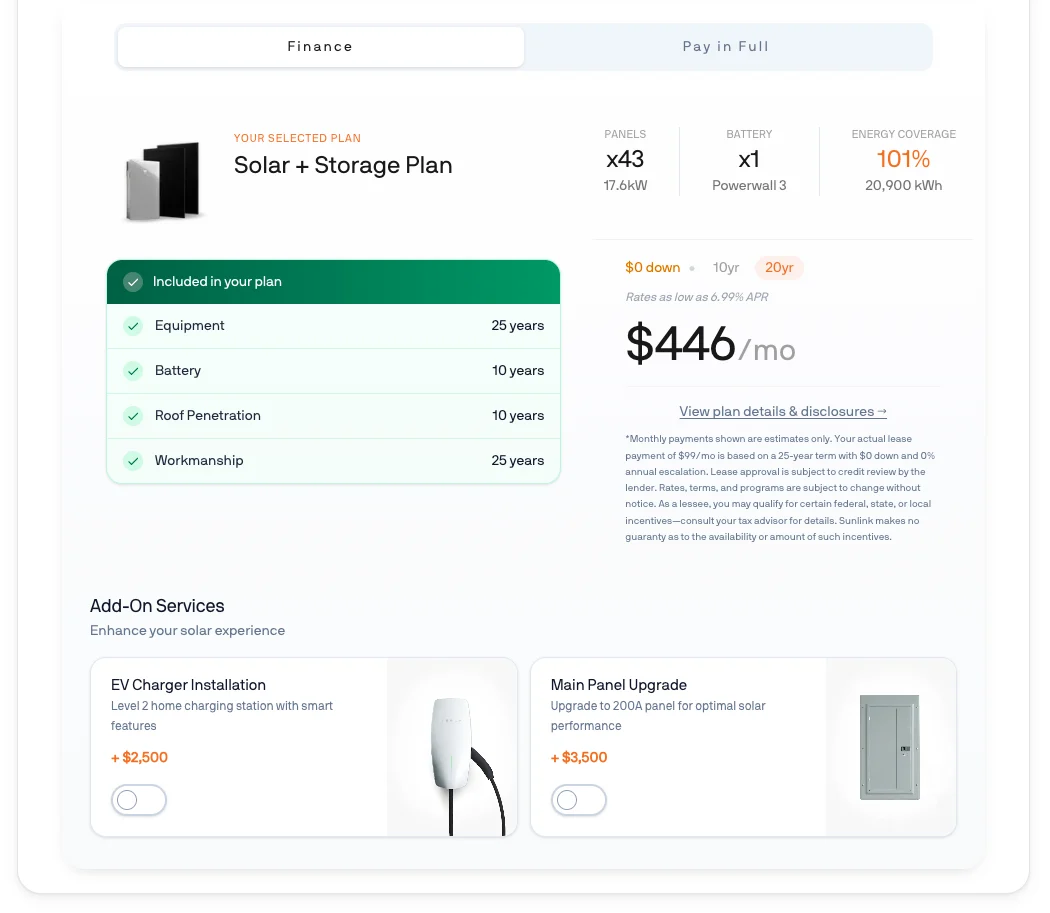
Loan and lease offers from a national solar lender come next, in the same flow as the design. The homeowner reads the disclosures, applies, and gets the decision by text message.
- The lender requires a shading report for every system. The platform produces it as a PDF from the same design data, so it always matches what was sold.
- If the design changes after approval, a change order goes to the lender, and the platform checks on it every two minutes until it settles. Nobody has to remember to follow up.
- Installers can correct a customer's utility details during a change, so the lender validates savings against accurate numbers.
Signed, paid, and handed to the right installer
The contract is signed in the customer's portal and the deposit is paid by card. We passed over the best-known e-signature service for one that could be built into the platform, so each installer company creates its own contract template in the browser and saves its signature once, and every signing still leaves an audit trail.
New projects are routed to the right installer company by district, and the lead fee is charged to that company's card on file automatically. From there the installer runs the job in their own portal:
- Teams with roles the owner defines: who can see projects, who can edit the calendar, who can change pricing floors.
- Design edits with a saved history, so any version can be restored.
- Documents, lender status, and a message thread with the customer on every project.
SunLink's own staff see all of it from an admin portal: customers, installers, markets, and how leads are being routed.
One owner for the whole thing
We took over the platform in its early stages, in late 2025, and held the architecture and the day-to-day engineering for all of it: the public site, the three portals, every vendor connection, and the computing behind the designs.
We staffed it the way we staff every project: one lead who holds the whole system, and specialists on the parts that need them. A product like this fails at the joins, where the design feeds the lender, the lender feeds the contract, and the contract feeds the installer. Someone has to be responsible for all of the joins at once.
If you have a product that depends on several vendors behaving like one, tell us what it needs to do, or read how we approach custom software.