From wholesale order to packed carton, with nothing retyped.
Client:

Xtreme Aquatic Foods
Fish food manufacturer and wholesaler
The problem
Off-the-shelf inventory software records an order as a number of units. A warehouse ships cases, loose jars, cartons, and pallets, to customers who each have their own prices and paperwork. At Xtreme, people closed the gap between the two by hand, and every new product had to be set up again in each system.
Our approach
We kept the inventory and accounting systems the company already relied on and built the two pieces they were missing: an app for the warehouse floor and an ordering site for wholesale customers. Both work from the same records, so there is one version of every order, product, and customer.
What changed
Every pick is checked by barcode, down to the case and the loose jar
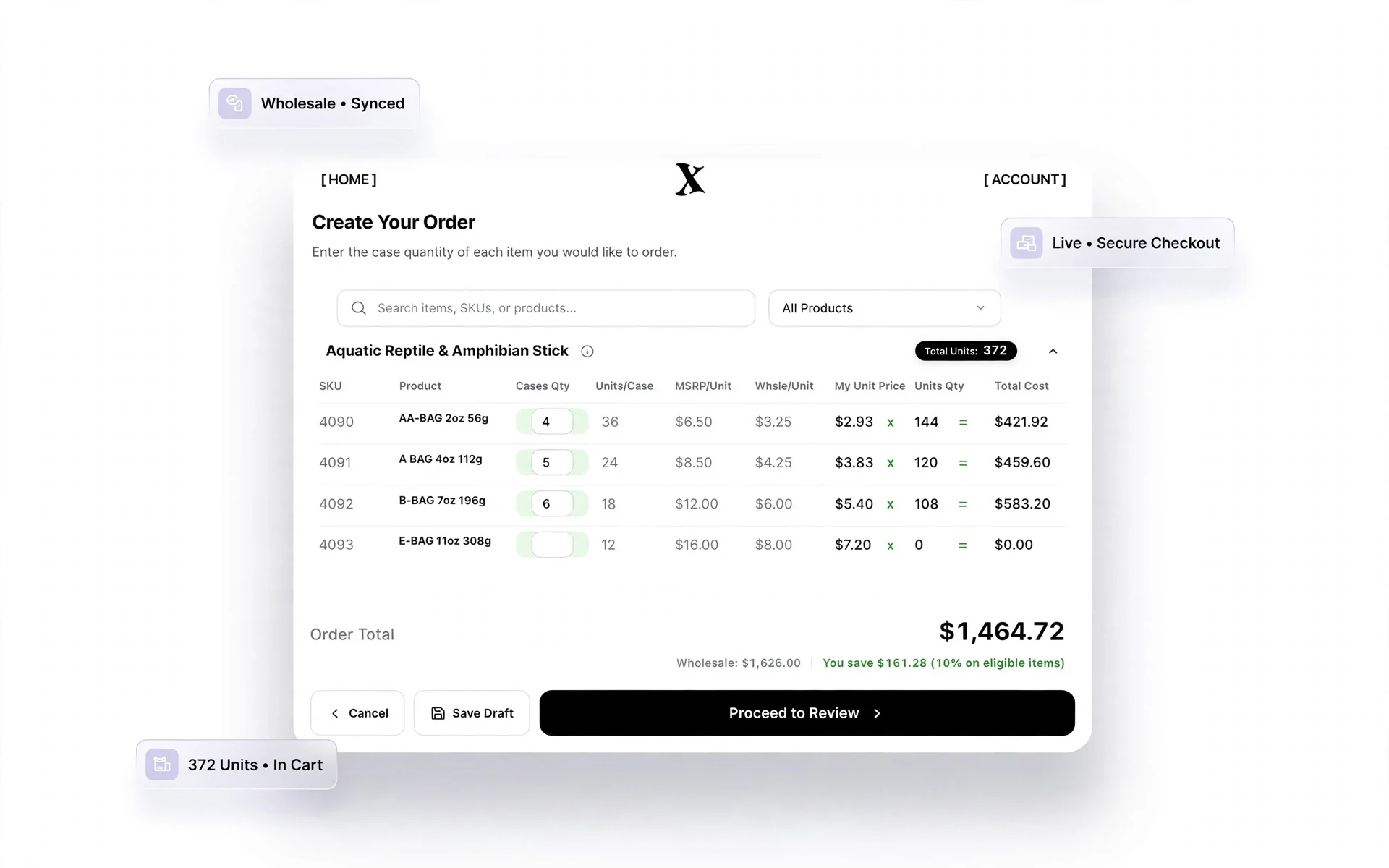
Wholesale customers order online from their own catalog and pricing
A new product is entered once and appears in all three systems
No order is approved without its invoice, and none is invoiced twice
A pick ticket that checks the work
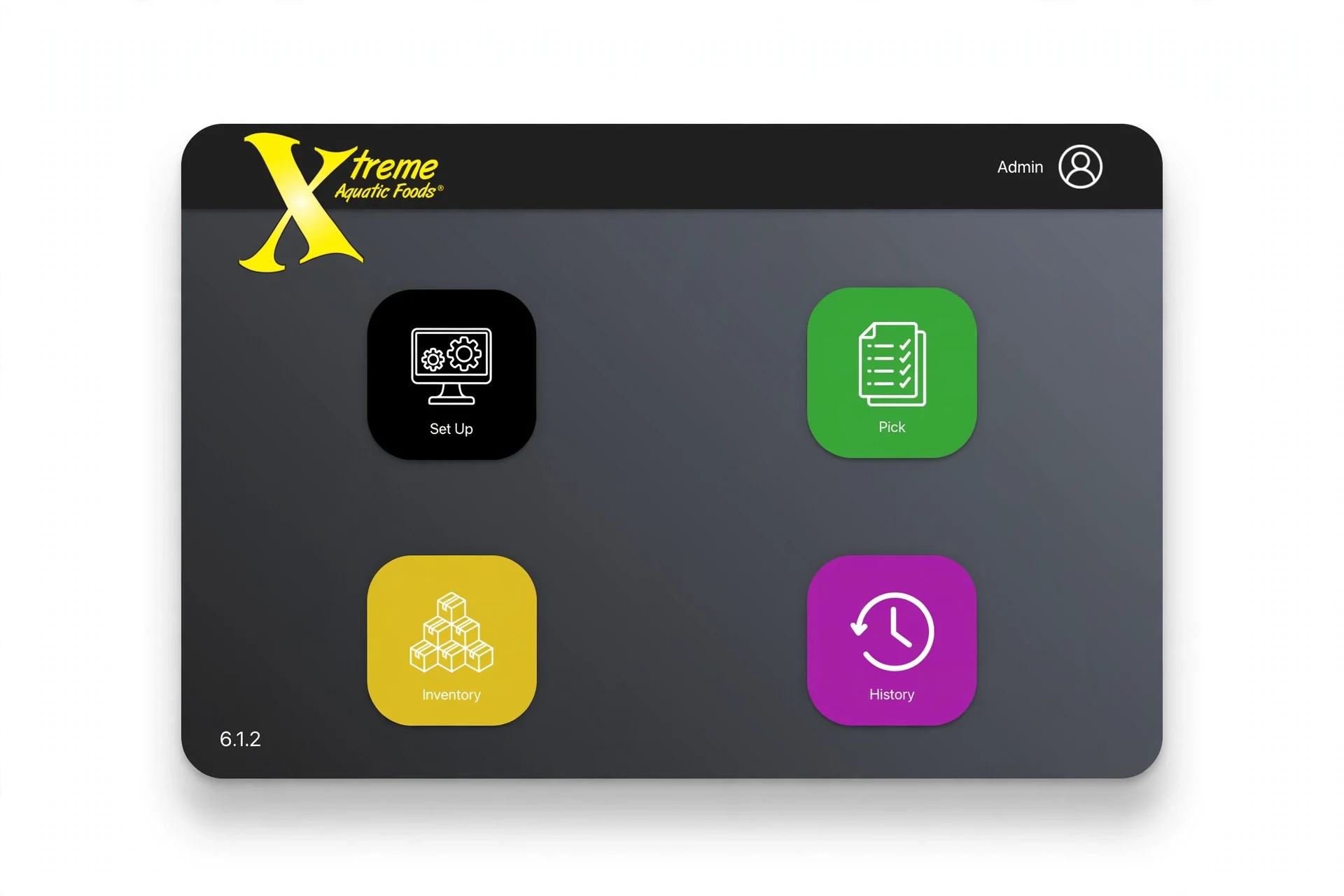
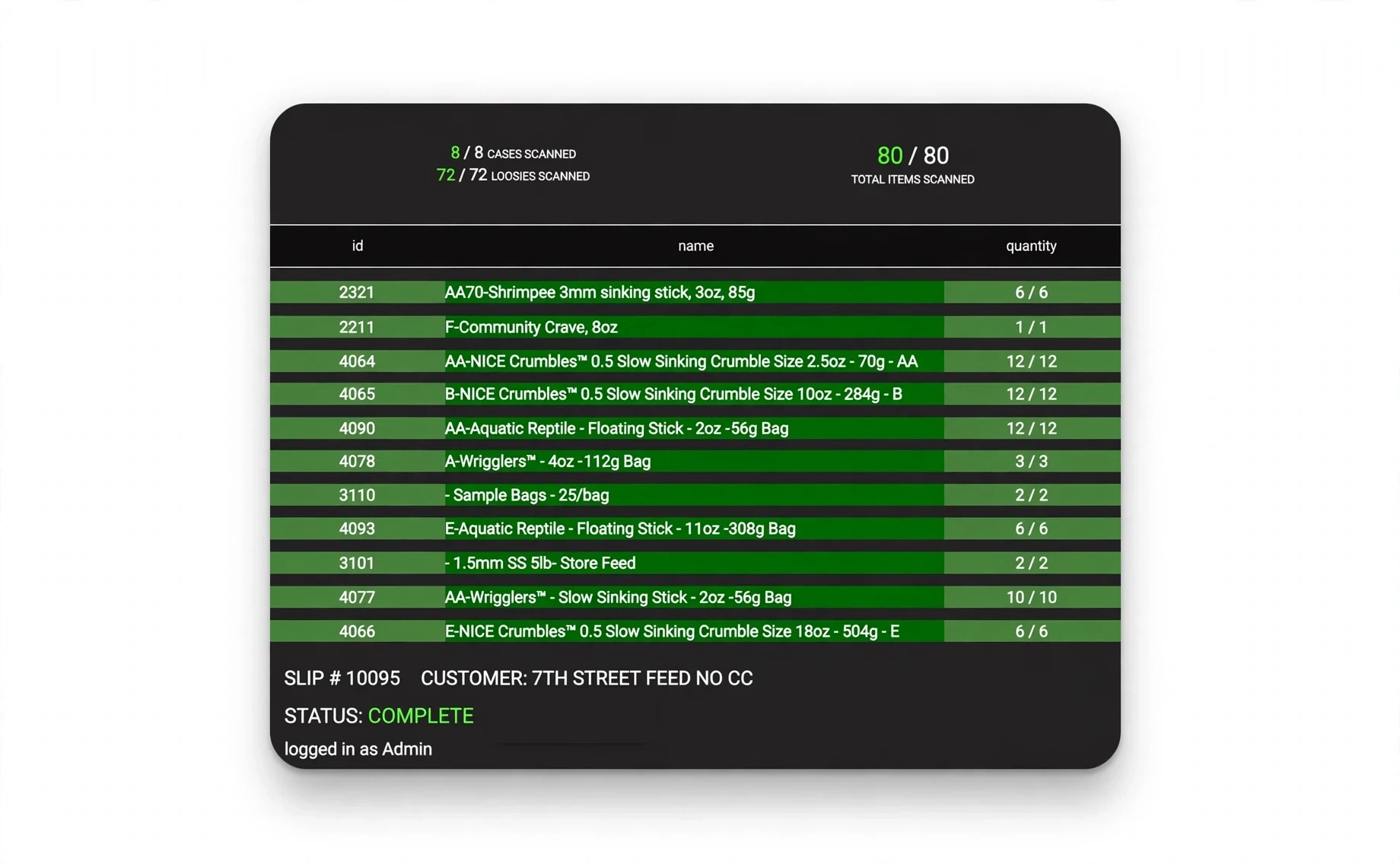
The inventory system records an order in single units. The warehouse ships cases and loose jars. PickApp does the conversion a picker used to do in their head: an order for 90 jars of a product packed 36 to a case becomes two cases and 18 loose jars, each with its own barcode to scan.
Every scan is checked against the ticket. An item that is not on the order is refused with an error tone. One case too many is refused with a different tone. The sounds are distinct on purpose, so a picker can work by ear without looking up at the screen.
A half-finished ticket can be saved and reopened later on any station in the warehouse, exactly where it was left. A slip that has already shipped answers “already completed”, so the same order cannot go out twice.
Nothing leaves without a weight and a label
A ticket cannot be closed until the packer records what is physically leaving the building: pallets with their weight and dimensions, or color-coded cartons with their weights. That record stays with the order, along with who picked it and when.
Carton labels print straight from the ticket with the invoice number, the customer's own purchase order number, and a carton barcode. The app keeps count of what has been printed for each carton, so a set of labels is never printed twice by accident.
A wholesale counter that is always open
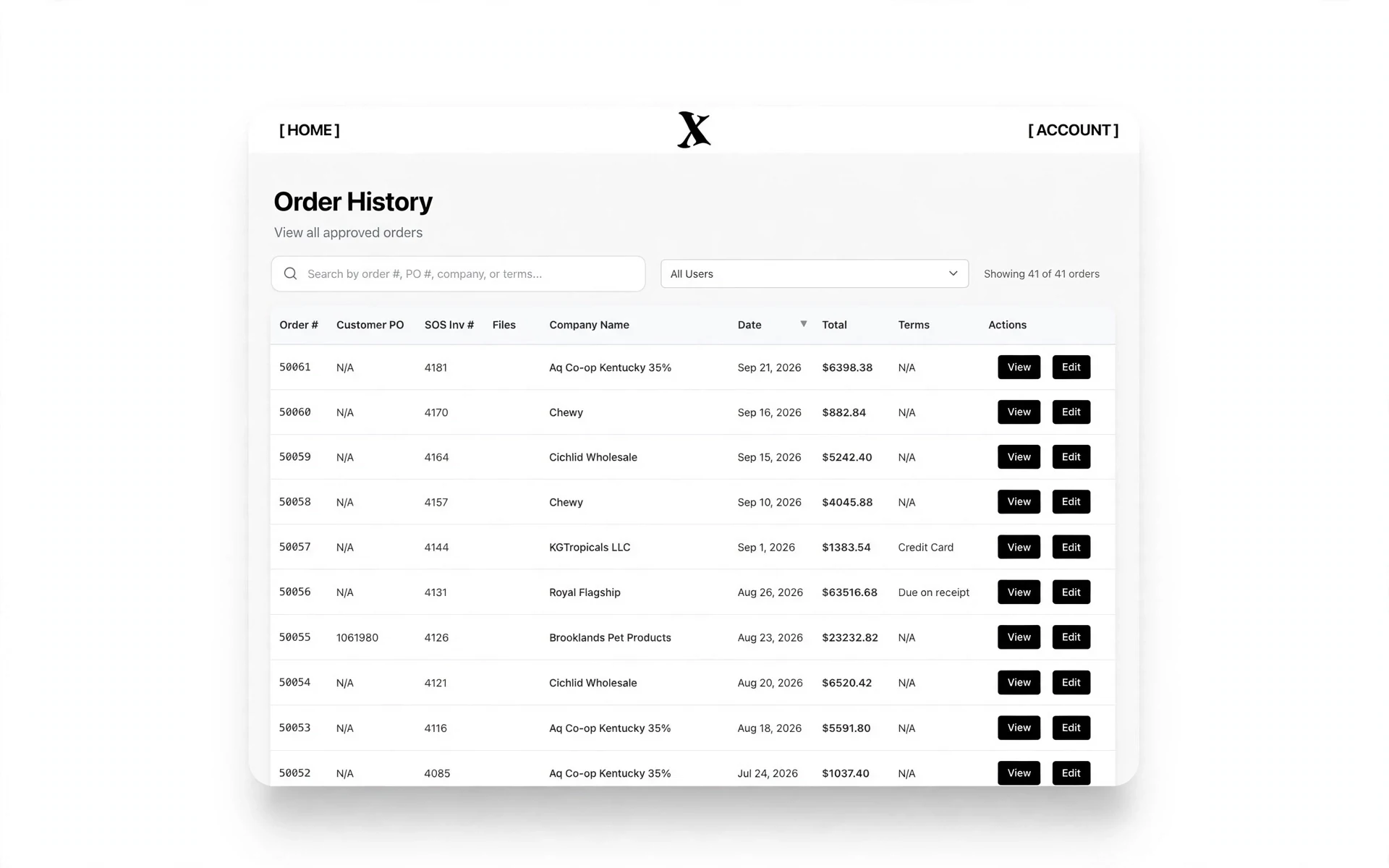
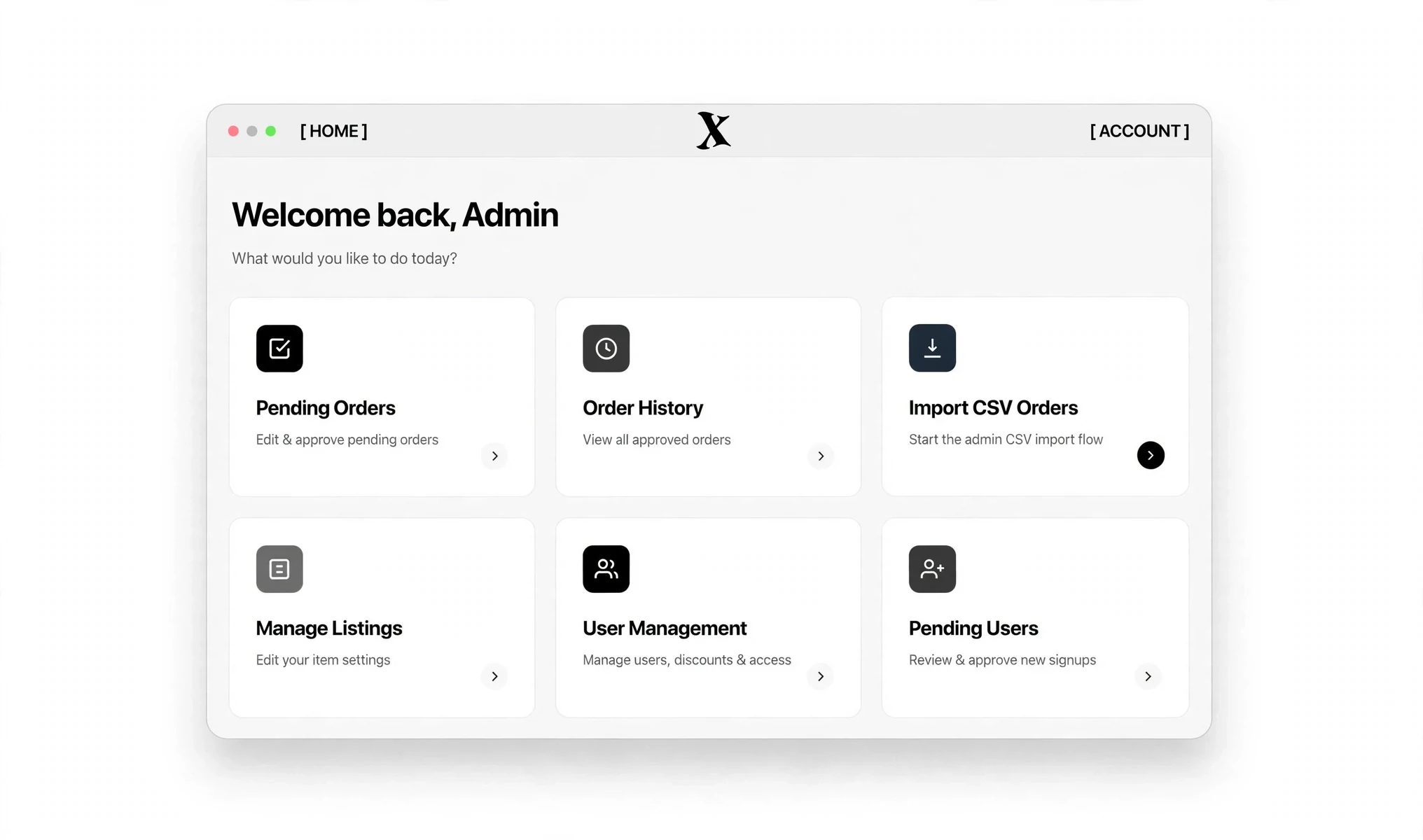
OrderXtreme is where wholesale customers place their own orders, by the case, at any hour. Each customer sees the catalogs assigned to them and their own discounts. If an order is under the minimum, the page says how much more to add. Drafts can be saved, and past orders are there to look up.
- New accounts wait for staff approval and are tied to the matching customer record in the inventory system.
- The customer's purchase order number travels with the order onto the invoice and onto the carton labels.
- International customers enter addresses and phone numbers in their own country's format.
- When a customer sends a spreadsheet instead, staff drop it in. The importer matches the products, stops on any row it cannot match with certainty, and hands a clean order to the normal review screen.
Staff can also hide, rename, or reprice a product on the ordering site without touching the inventory system underneath it.
One record, three systems
Most of the work in connecting software is in the seams: the moments where two systems could end up disagreeing. We designed those moments deliberately.
| What could go wrong | What happens now |
|---|---|
| A new product set up three times, three different ways | It is entered once and created in the inventory system, the warehouse app, and the ordering site together. A product code that already exists anywhere is refused. |
| An order approved with no invoice behind it | The invoice is created first. The order is marked approved only if that succeeds. |
| A dropped connection invoicing a customer twice | The site keeps a receipt of the first attempt and blocks a blind retry. |
| The same customer signing up twice | The second signup is linked to the existing customer record instead of creating another. |
| An approved order that needs to change | Staff edit it in one place and the existing invoice is updated to match. |
Stock counts and production builds are recorded from the warehouse app and posted to the inventory system, and an audit screen lists any product whose records have drifted apart.
Where it goes next
We have worked with Xtreme since 2022, and the system has grown in the order the business needed it: accuracy in the warehouse first, then trustworthy inventory, then ordering for customers, then the seams between them.
The next stage is already designed. Purchasing, production runs, lot tracking, and demand forecasting will move into the same set of records, so the system can say what is running low, what it takes to make more, and when to order it. It recommends. A person approves every purchase.
If your business has outgrown the software it runs on, tell us where it hurts, or read how we approach systems integration.